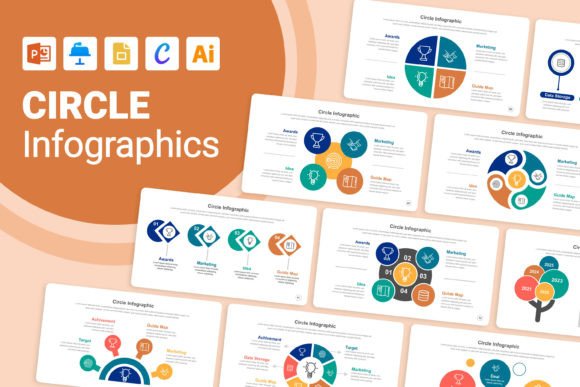
Circle Infographic Templates: Design Clarity
In a world saturated with linear bullet points and static bar charts, the human eye naturally seeks patterns and visual breaks. We are drawn to cycles, processes, and connections. This is where Circle Infographic Templates step in, offering a dynamic alternative to the traditional grid. These templates are not just about aesthetic appeal; they are a strategic design asset for anyone looking to present complex information with clarity. By utilizing a radial layout, you create a central focal point that anchors your data, making it significantly easier for your audience to grasp relationships between different metrics at a glance.
Imagine trying to explain a product lifecycle or a market segmentation strategy using a standard bulleted list. It works, but it lacks narrative. Now, picture that same data arranged in a concentric ring, with the core concept in the center and supporting details radiating outward. This is the power of radial infographics. They transform dry statistics into a visual journey. For entrepreneurs and marketers, this means your quarterly reports or pitch decks can finally hold the attention they deserve. These templates are designed to be fully editable, ensuring that whether you are using PowerPoint, Google Slides, or Canva, the transition from concept to presentation is seamless.
The Strategic Value of Radial Visuals
Why choose a circle over a rectangle? The answer lies in how our brains process visual hierarchy. A circular format naturally guides the viewer's eye in a loop, encouraging them to consume all the information presented rather than scanning down a list and stopping halfway. This is particularly effective for brand identity presentations or process overviews. When you use Circle Infographic Templates, you are leveraging a design principle that implies wholeness, unity, and continuity. It subconsciously tells your audience that the elements you are presenting are interconnected.
- Process Visualization: Perfect for displaying cyclical workflows, feedback loops, or continuous improvement models.
- Market Share & Demographics: While pie charts are common, a radial infographic allows for layered data, showing percentages alongside qualitative descriptions.
- Feature Highlights: Place your main product in the center and arrange key features or benefits around it to create a comprehensive overview.
For content creators and bloggers, these templates serve as excellent standalone graphics for social media. A well-designed circle graphic can function as a "mini-infographic" on Instagram or Pinterest, conveying a tip or a set of steps in a single, shareable image. This versatility makes them a valuable addition to any designer's toolkit, bridging the gap between web design and editorial design.
Customizing for Maximum Impact
The true utility of these templates lies in their adaptability. A common mistake in data visualization is letting the design overshadow the content. However, premium templates are built with balance in mind. When you download a set of Circle Infographic Templates, look for the variety of "slices" or segments offered. You need options that fit the density of your data. A template with eight segments works differently than one with three. Ensure the one you select aligns with the amount of information you need to convey without making the design feel cluttered.
Consider the visual personality of your brand when customizing. If your brand identity relies on a sans serif font for a clean, modern look, ensure your text elements within the circles reflect that. The templates usually come with placeholder text, but swapping in your corporate typography is crucial for consistency. Furthermore, pay attention to the negative space. In radial designs, the white space between the center and the outer rings is just as important as the graphics themselves. It ensures readability, allowing your key statistics to stand out rather than getting lost in a sea of color.
Compatibility and Workflow Integration
One of the biggest hurdles in using new design assets is the technical barrier. Fortunately, modern Circle Infographic Templates are designed for cross-platform compatibility. Whether you are a freelancer working in Adobe Illustrator or a corporate manager building a deck in Google Slides, these files are optimized for your environment. This compatibility extends to Apple Keynote and Canva, ensuring that you don't need to be a graphic design expert to achieve professional results.
When integrating these templates into your workflow, think about the visual hierarchy. The center of the circle is prime real estate. It should hold your most critical piece of information or your main takeaway. The surrounding segments should support that central claim. For example, if you are a small business owner presenting a growth strategy, the center might say "2024 Growth Plan," while the surrounding segments detail the specific pillars of that plan: Marketing, Sales, Product, and Support. This structure helps your audience immediately understand the "what" and the "how" of your presentation.
Practical Applications Across Industries
The application of circle infographics goes far beyond standard corporate presentations. In packaging design, radial elements are often used to highlight ingredients or usage instructions on the back of a box. By using a template to draft these layouts, you can ensure that the information is legible and aesthetically pleasing before moving to the final print stage. Similarly, in web design, radial charts can be used to display user ratings, service breakdowns, or team structures on an "About Us" page, adding a layer of interactivity and visual interest.
For educators and hobbyists, these templates are invaluable for breaking down complex subjects. A history teacher might use a timeline arranged in a circle to show the rise and fall of a civilization, while a crafter might use it to map out a complex project timeline. The adaptability of the format makes it a universal tool for communication. It simplifies the complex, which is the ultimate goal of any good design.
Tips for Choosing the Right Template
Not all templates are created equal. When selecting your assets, prioritize quality over quantity. Look for templates that offer vector-based graphics (SVG or AI files) as these will scale without losing quality, whether you are projecting on a large screen or printing on a small flyer. Check for color customization options; you should be able to easily change the palette to match your specific brand identity without manual recoloring of every element.
Finally, consider the context of your presentation. If you are presenting data-heavy information, choose a template with ample space for text and clear segmentation lines. If the goal is more conceptual, a template with icons and less text might be more effective. By thoughtfully selecting and customizing your Circle Infographic Templates, you move beyond simple data presentation and start creating genuine visual stories that resonate with your audience.